
Baby Room Humidity: What Level and Which Type

When my sister brought her newborn home in January, the first thing she asked me was whether the nursery needed a humidifier. Everyone had told her something different. Some said run one all night, others said never. The honest answer is that it depends on your actual air, and you can find out in about five minutes, before you spend anything or add another appliance to a baby’s room.
Start With a Number, Not a Guess
Both Mayo Clinic and the EPA point to the same range. Mayo says it is ideal to keep the humidity in your home between 30% and 50%. The EPA advises keeping indoor humidity below 60 percent, ideally between 30 and 50 percent. Low humidity can leave the inside of the nose dry and irritated, and too much can encourage mold and dust mites.
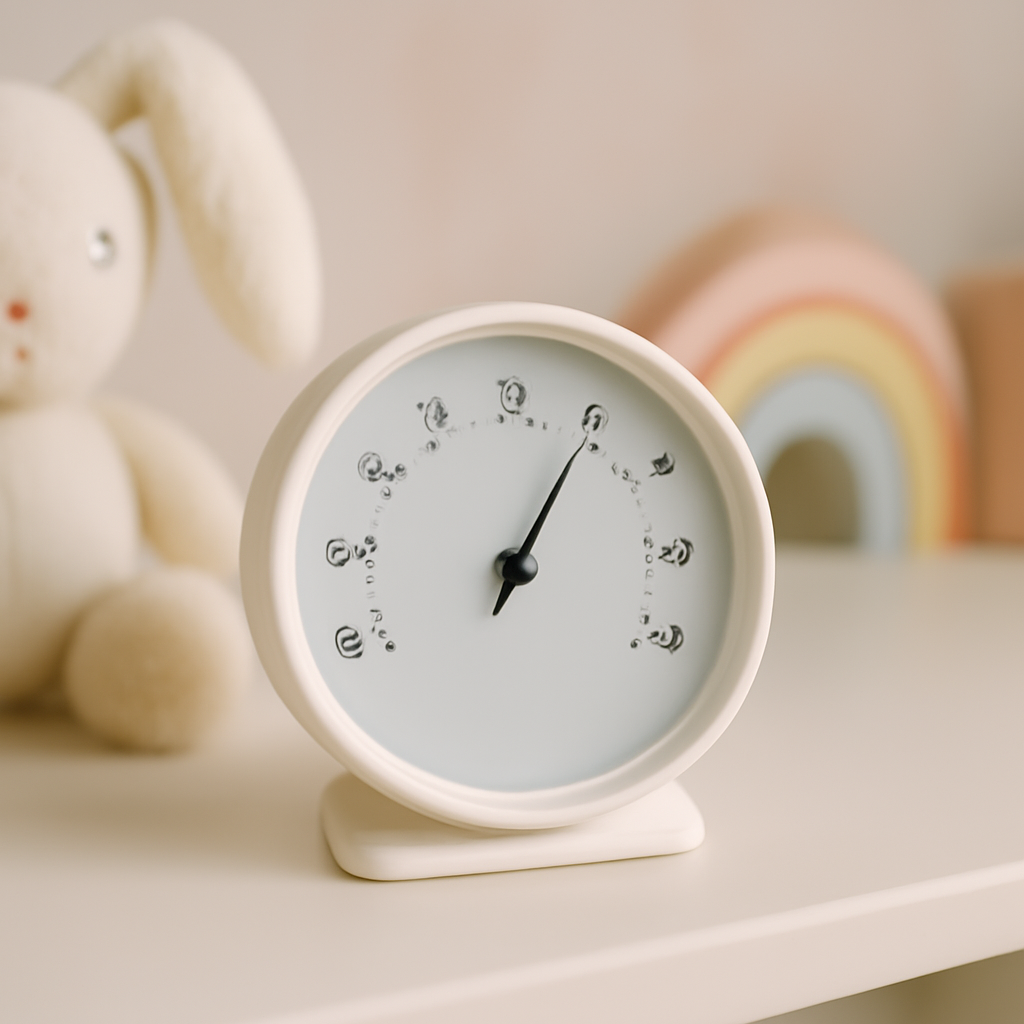
A small digital hygrometer tells you where the room stands. Place it near, but not inside, the crib area and read it at different times of day, including overnight, since humidity often drops once the heating cycles on. In my sister’s nursery it sat in the low 30s at night and dipped below that on the coldest days, which is when a humidifier made sense for her.
Cool Mist or Warm Mist for a Nursery
Humidifiers come in a few types. Mayo Clinic describes evaporative models, which use a fan to blow air through a wet wick, filter or belt, and steam vaporizers, which use electricity to heat water. For a baby’s room I lean toward cool-mist, because a heated unit adds hot water and a hot surface in a space where little hands and sudden spills are a fact of life.
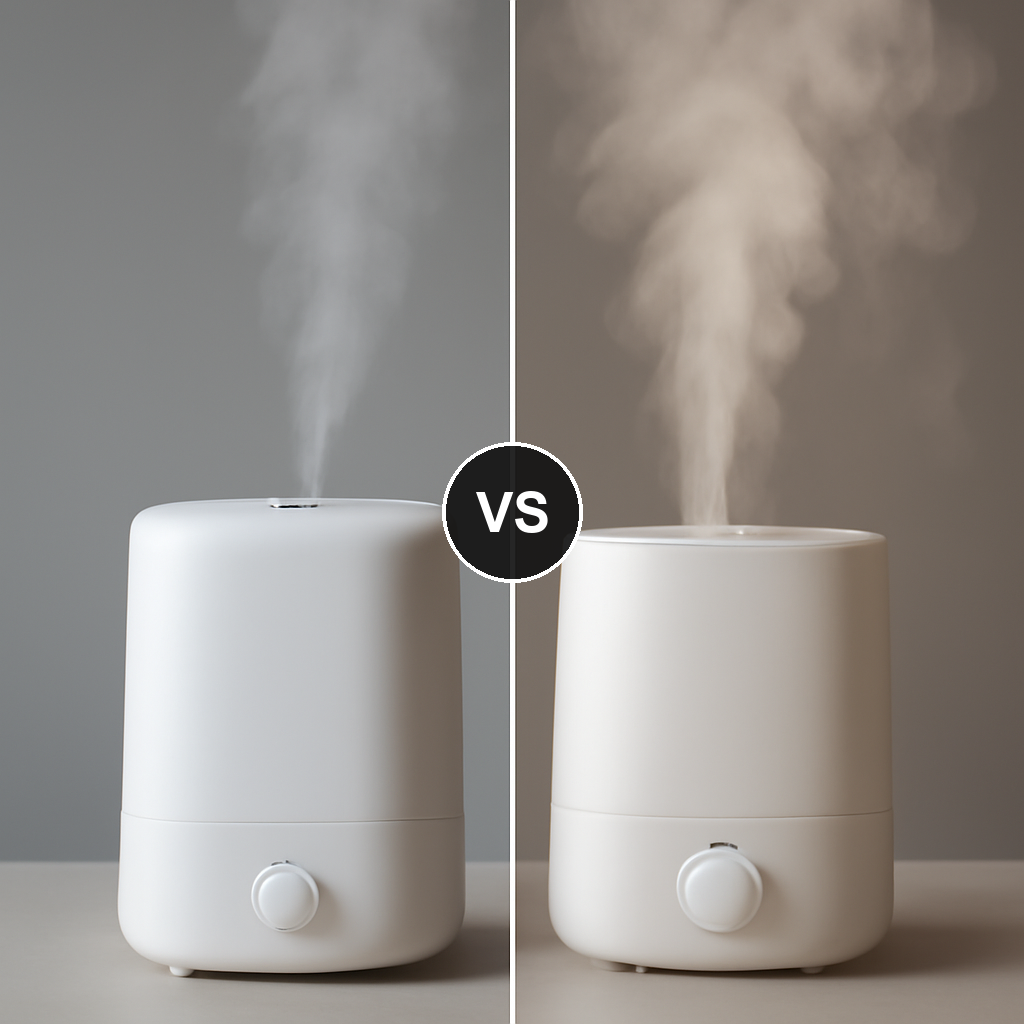
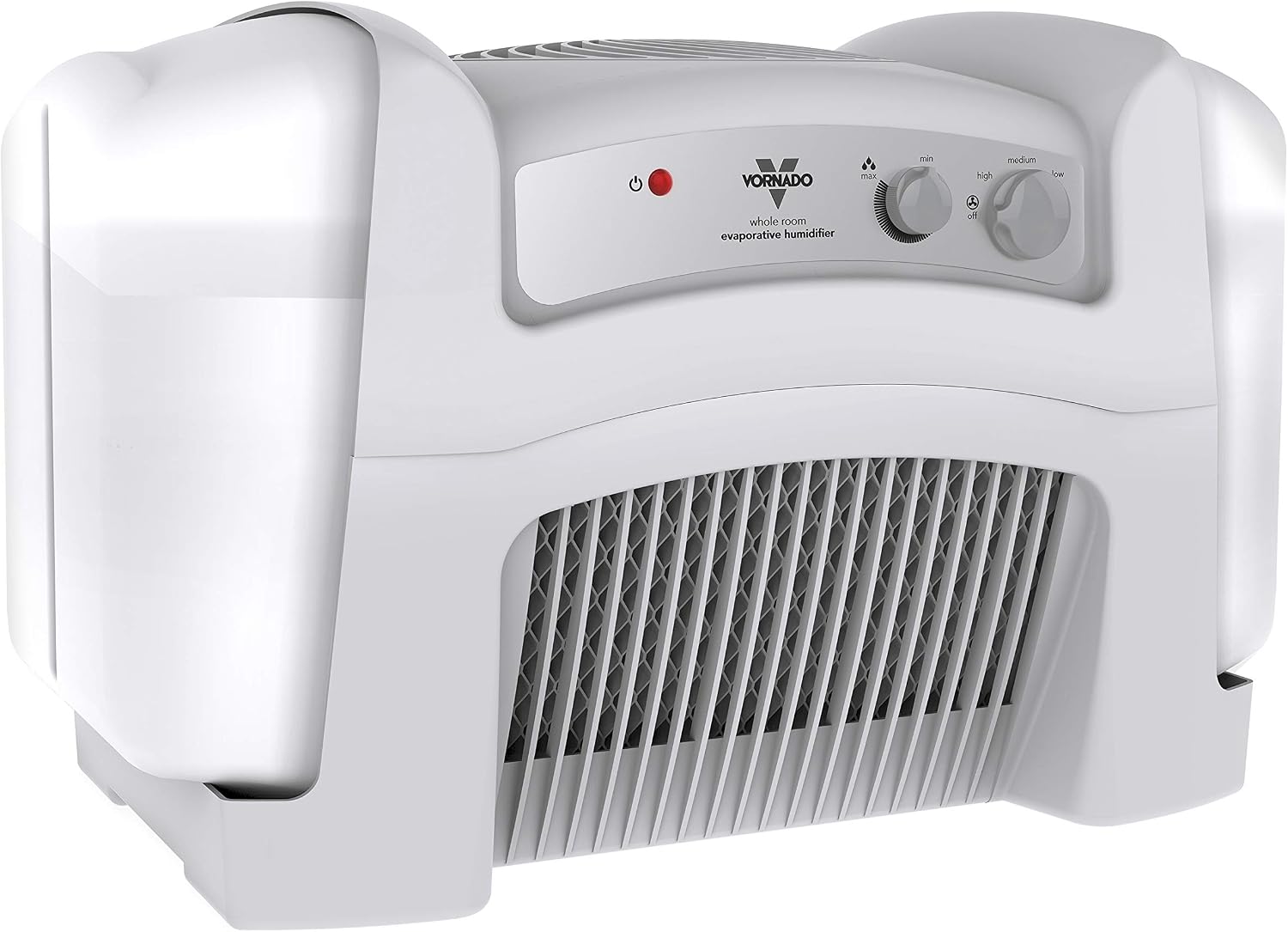
If you are comparing models, our baby room humidifier reviews cover quiet operation, tank size and ease of cleaning, which matter more at 3 a.m. than any feature list.
Placement and Safety
Put the unit on a stable, waterproof surface well out of reach of the crib, with the cord tucked away, and aim the mist away from the bed, bedding and walls. Keep the area around it dry. If the floor, wall or window nearby starts to feel damp, the humidity is too high and the unit should be turned down or off. Do not run it flat out just because the room feels dry.
Cleaning Matters More With a Baby
Mayo Clinic warns that humidifiers can make you sick if they are not maintained, because mold or bacteria can grow in a dirty one. It recommends distilled or demineralized water in portable units, since minerals in tap water can allow bacteria to grow and show up as white dust. That is a good reason to keep a simple routine; our guide on how to clean a humidifier walks through it step by step.
When You May Not Need One at All
If the hygrometer shows the room already sits between 30% and 50%, skip the humidifier. If it reads above 60%, you have the opposite problem, and adding moisture will make it worse. A damp nursery on a lower floor may need a dehumidifier instead, and our whole-house dehumidifier reviews cover that side of the equation.
Signs the Air Is Off
Your hygrometer is the best judge, but the house gives hints too. Static shocks, a scratchy throat, cracked lips and a dry nose point to low humidity. Mayo Clinic notes that low humidity can cause dry skin and bother the inside of the nose. Fogged windows, a musty smell, damp corners and peeling paint point the other way, toward too much moisture. In a nursery, either extreme is worth fixing, and a measurement tells you which direction to go.
Expect the Numbers to Change With the Seasons
Humidity does not stay put. Mayo Clinic points out that humidity levels tend to be higher in the summer and lower in the winter. That means the humidifier you needed in January may be unnecessary by May. I suggest checking the reading once a week through the heating season, and again when the weather turns, rather than assuming last winter’s setup still fits. Many families run a unit all year simply out of habit, and that is exactly how a clean-looking nursery ends up too damp.
A Quick Nursery Checklist
- Measure the humidity first, including overnight.
- Aim for the 30% to 50% range, and stay below 60%.
- Choose a cool-mist model and place it far from the crib.
- Use distilled water and clean the unit on a schedule.
- Turn it off when the range is met, and recheck after a few days.
Ask Your Pediatrician
Every baby and every home is different. If your child has breathing problems, frequent congestion or allergies, talk to your pediatrician before changing anything about the air in the room. A humidifier is a comfort tool, not a treatment, and the best version of it is a clean, correctly placed unit that only runs when the air actually needs it.
Categorised in: Buying Tips, Humidifier