
Do Air Purifiers Help With Pet Dander?
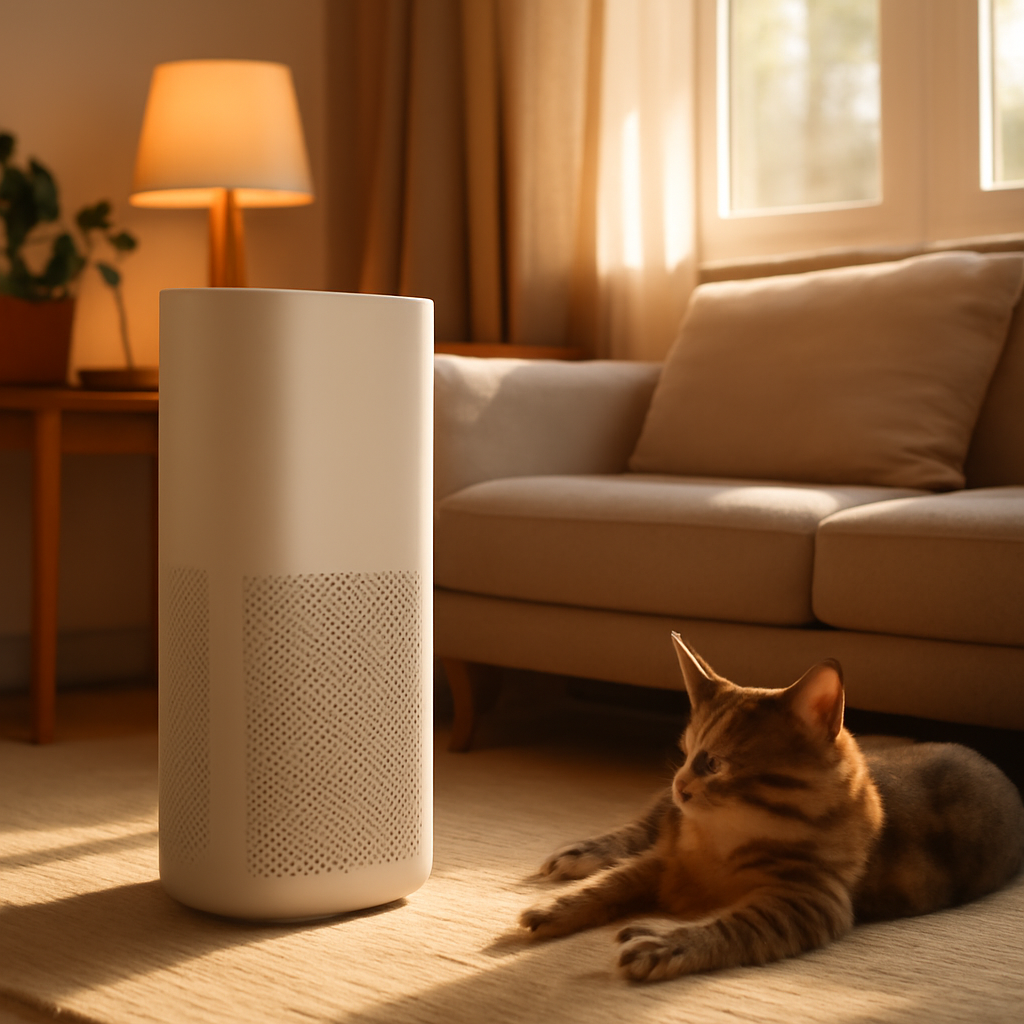
If you share your home with a dog or cat, you already know the routine: fur on the couch, a faint dusty smell in the room where the pet sleeps, and a lot of sneezing from a visitor who “didn’t think they were allergic.” An air purifier is one of the first things people reach for. It can help, but only if you buy the right kind, size it properly and treat it as one tool among several, not a fix on its own.
What a Purifier Can and Cannot Do
The EPA’s guide to air cleaners in the home is a useful reality check. It says research shows that filtration can be an effective supplement to source control and ventilation, and that using a portable air cleaner, or upgrading the filter in your furnace or HVAC system, can help improve indoor air quality. It is equally clear that filtration does not replace the need to control pollutants and to ventilate.
For pet owners, that translates into a simple idea. A purifier captures particles that are already floating in the air. It does not stop your pet from shedding, and it does not clean the sofa or the bedding where dander settles. The best results come from using it alongside the basics.
Match the Purifier to the Room
The EPA advises choosing a portable air cleaner with a clean air delivery rate, or CADR, large enough for the size of the room where you will use it. The higher the CADR, the more particles the cleaner can filter and the larger the area it can serve, and most packaging tells you the largest room it should be used in.
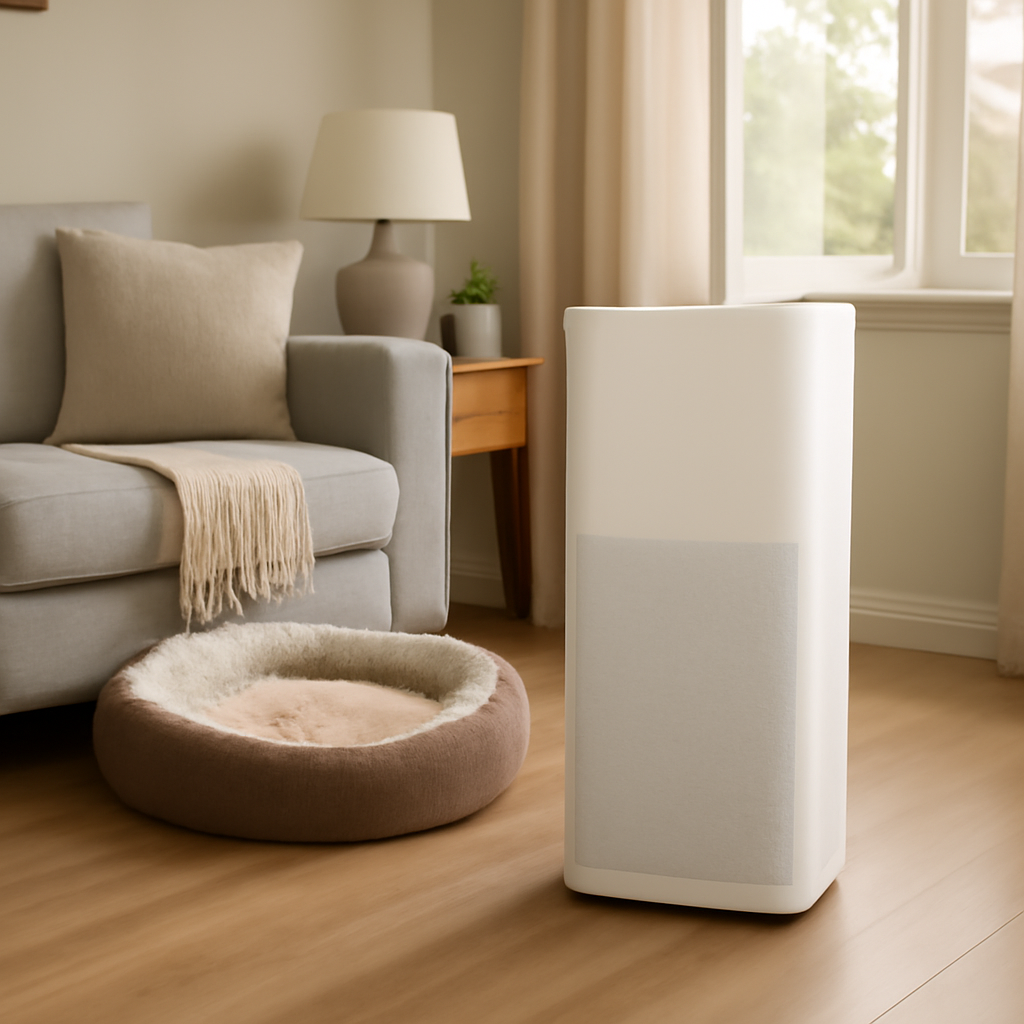
That is where many people go wrong. A compact unit is perfect for a bedroom, but it will struggle in a large open living room. When I tried a small purifier in a big living space, it ran constantly on its highest setting and barely changed how the room felt. Moving it into a bedroom, which is the size it was built for, made it much more useful.
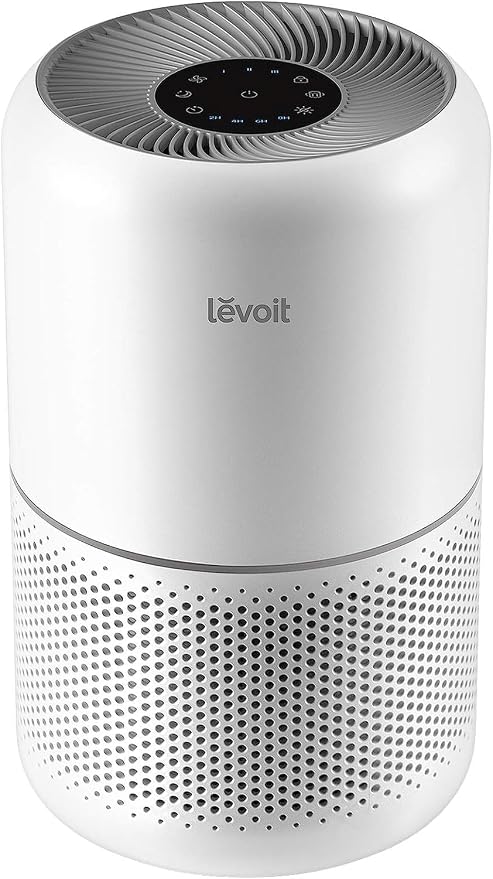
Our HEPA air purifier reviews list the recommended room size for each model, and our air purifier buying guide explains how to read the specifications.
Skip Anything That Makes Ozone
Some devices marketed as air cleaners deliberately produce ozone. The EPA has a page on this, and it warns that ozone can harm health and that at concentrations that do not exceed public health standards, ozone has little potential to remove indoor air contaminants. If you want to know how different technologies compare, our post on HEPA versus ionic air purifiers breaks it down, and the EPA’s page on ozone generators sold as air cleaners explains the concern in detail.
Filters Need Regular Replacement
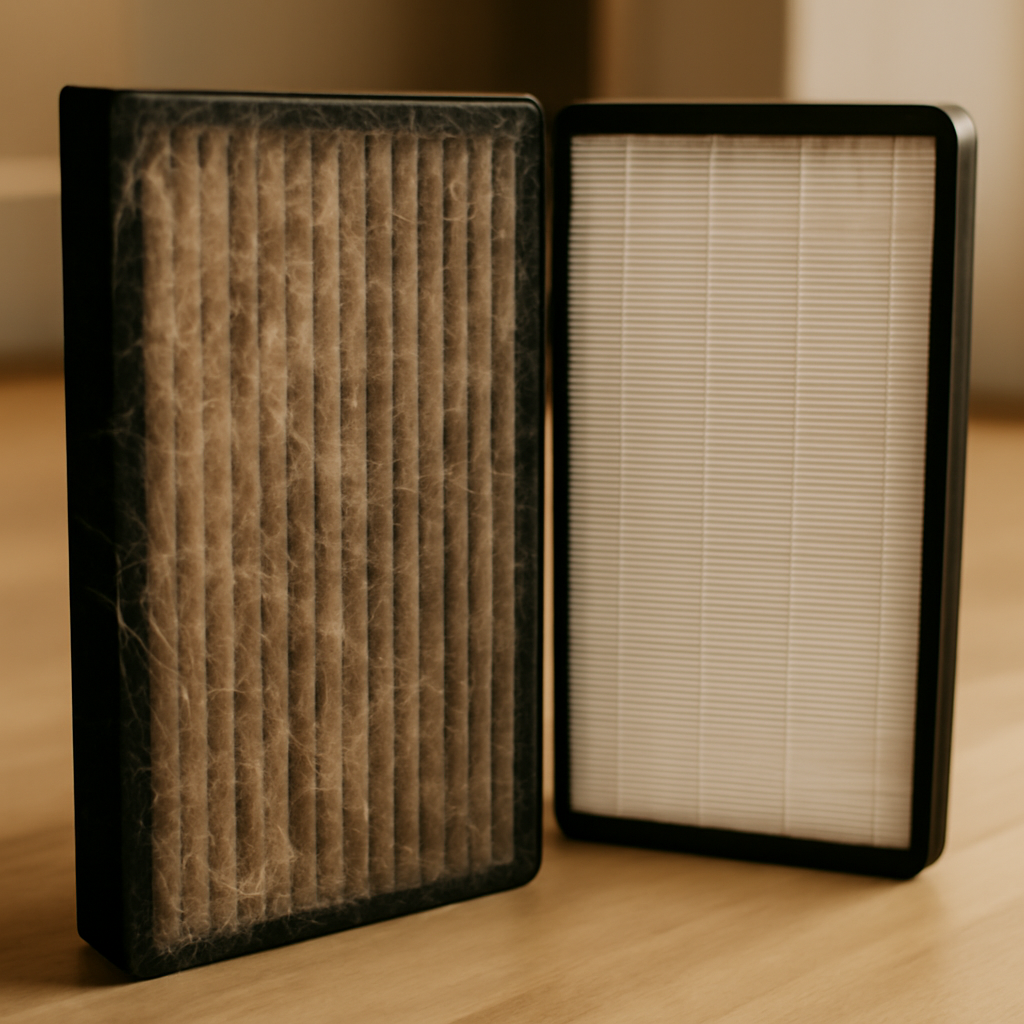
This is the part people forget. The EPA states that all filters need regular replacement, and that a dirty, overloaded filter won’t work well. In a home with pets, filters load up faster than the box suggests. I check mine monthly by looking at the pre-filter, and I replace the main filter on the schedule the maker gives, sooner if the unit is running hard through shedding season.
Do the Basics Too
- Wash pet bedding and throw blankets regularly in the hottest water the fabric allows.
- Vacuum often, ideally with a machine that has a sealed system and a HEPA filter.
- Groom pets outdoors or in an easy-to-clean room when you can.
- Make one room pet-free, usually the bedroom, and put your purifier there.
- Ventilate when outdoor air is clean, since the EPA is clear that filtration does not replace ventilation.
Where to Put It
Place the purifier in the room where you spend the most time, keep it a few inches from walls and furniture so air can move freely, and keep doors closed so it is cleaning one space, not trying to treat a whole floor. A bedroom purifier running overnight is often the most noticeable improvement for pet owners who struggle with morning congestion.
How to Tell Whether It Is Working
Do not judge a purifier by whether it feels quiet or looks impressive. Pick one clear measure and track it. For some people that is how they feel on waking, for others it is how quickly dust returns to a shelf. A basic indoor air quality monitor can show particle readings trending down after you start running the unit. Give it a couple of weeks of consistent use with the door closed, and write down what changes. If nothing improves, the unit may be too small for the room, the filter may be loaded, or the main source of the problem may be the bedding and furniture rather than the air.
The Bottom Line
An air purifier can reduce airborne pet particles when it is the right size, the right type and kept up with fresh filters. It works best as part of a routine that includes washing, vacuuming and ventilation. Buy for the room, avoid ozone, replace the filter on time, and expect a steady improvement, not a miracle. If allergies are a serious problem for someone in your home, talk to a doctor as well.
Categorised in: Air Purifier, Buying Tips