
What Size Dehumidifier Do You Need? A Sizing Guide
The most common dehumidifier mistake I see is buying by price or by a big number on the box without checking what the room actually needs. A unit that is too small runs all day and never catches up, and one that is far too big for a small, lightly damp room wastes money. Sizing is not complicated once you know the two things that decide it, and a published chart makes it easy.
What the “Pint” Number Actually Means
According to ENERGY STAR, a dehumidifier’s size or capacity is usually measured in pints of water removed per 24 hours. The capacity you need depends on two factors: the size of the space you want to dehumidify, and the conditions in that space without a dehumidifier. In plain terms, a damp 400 square foot basement and a damp 1,800 square foot one need different machines, and a basement that feels clammy needs more than one that is only a little stuffy.
ENERGY STAR also notes that capacity ratings have changed in recent years under updated test standards. When comparing models, compare ratings from the same standard rather than assuming an old and a new pint number mean the same thing.
Step One: Rate How Damp the Space Is
Be honest here. A cheap hygrometer gives you a real reading instead of a guess, and the EPA advises keeping indoor humidity below 60 percent, ideally between 30 and 50 percent. If the room reads well above that, use the table below to match your conditions to a capacity range.
| Condition without a dehumidifier | Small to medium room (under 2,000 sq. ft.) | Large room (over 2,000 sq. ft.) |
|---|---|---|
| Slightly to moderately damp: feels damp, intermittent musty odor, 50-75% relative humidity | 20-30 pints per day | 30+ pints per day |
| Very damp: consistently damp and musty, damp spots on walls and floors, 75-90% relative humidity | 25-40 pints per day | 40+ pints per day |
| Wet: walls or floor sweat, or seepage; laundry drying, 90-100% relative humidity | 30-50 pints per day | 50+ pints per day |
Source: ENERGY STAR estimated minimum capacity for portable dehumidifiers.
Step Two: Match the Room Size
The same table splits by room size at 2,000 square feet. Most basements, bedrooms and living areas fall in the small-to-medium column. Large open basements, whole floors and big finished lower levels land in the second column. If your space sits near the line, I go to the higher range, which leads to the next point.
Better to Oversize Than Undersize
ENERGY STAR says it is better to oversize than undersize. I agree from experience. The first basement unit I bought was sized right on the edge, and during humid weeks it ran nonstop and still left the room clammy. A properly sized unit reaches the target humidity, cycles off, and uses less running time overall. If you already own a dehumidifier, ENERGY STAR suggests judging the capacity you need by how much water you empty each day.
Portable or Whole-Home?
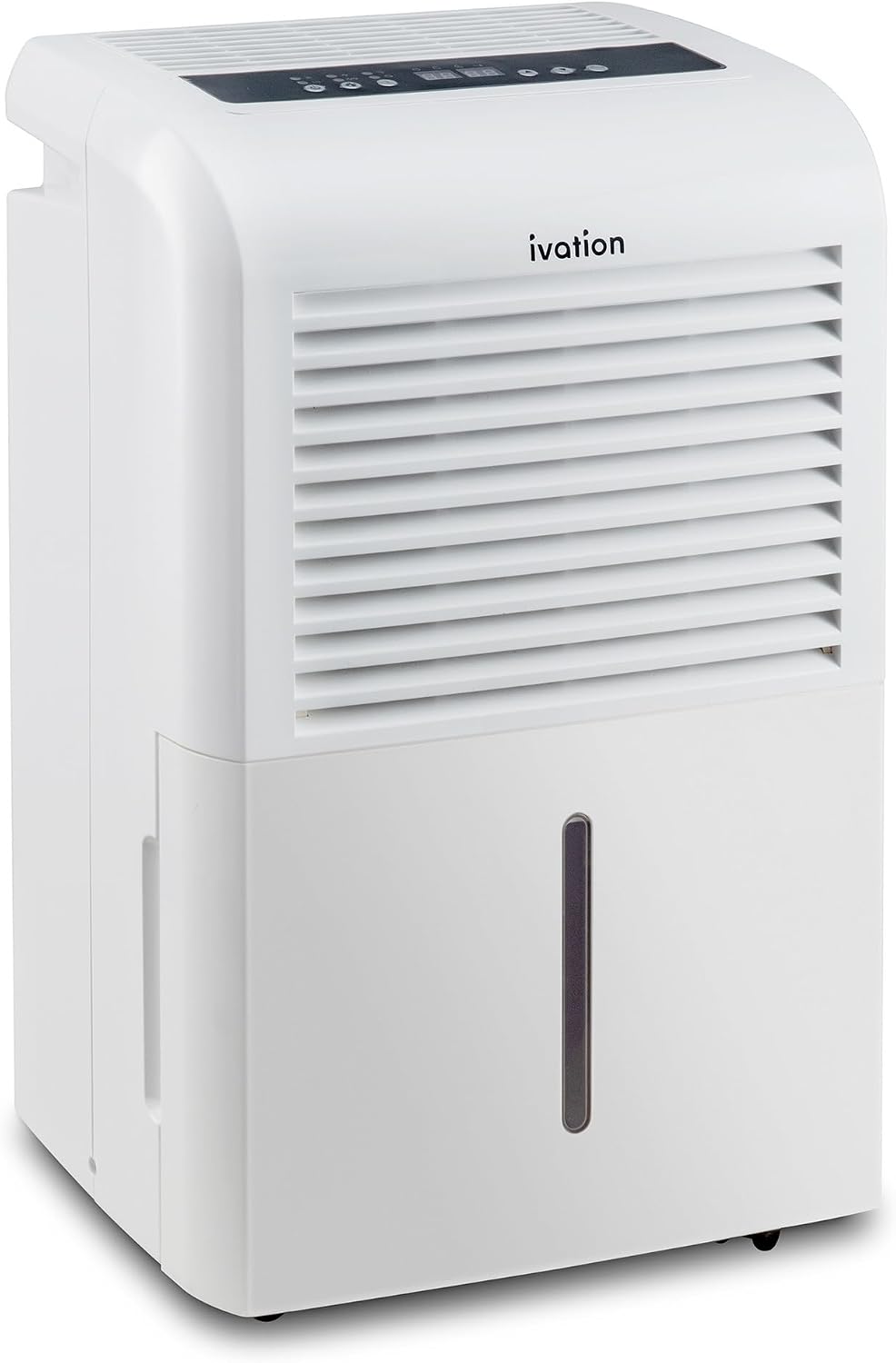
Portable room units are typically used to dehumidify one room or space. They are the right fit for a single damp basement room, a laundry area or a bedroom.
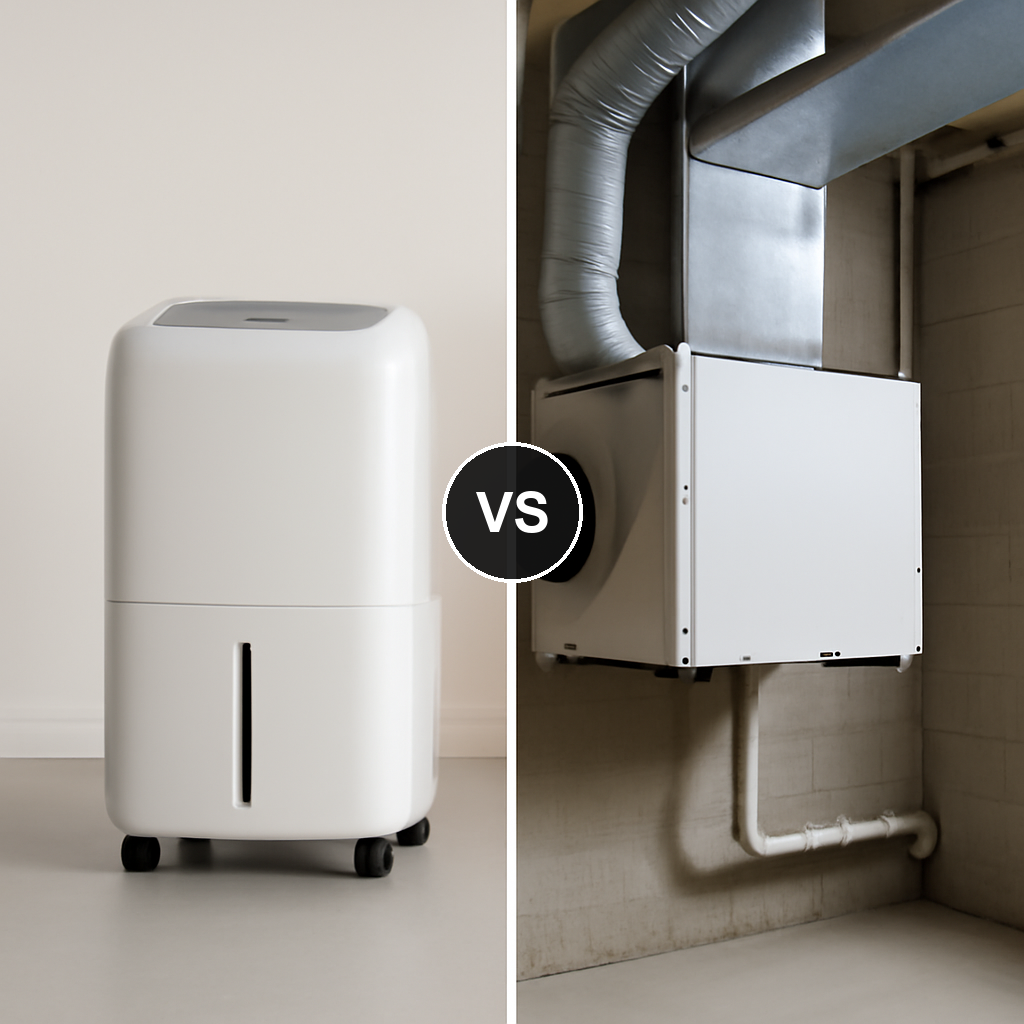
When the dampness spreads across a whole floor or house, a whole-home unit connected to your ductwork can make more sense. It handles a larger area from one location, and it can drain continuously without bucket emptying.
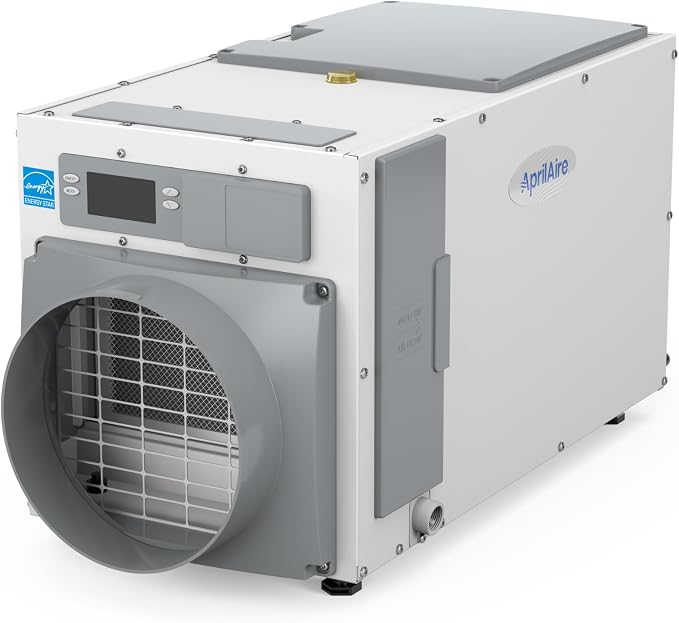
For help choosing, our basement dehumidifier reviews cover room-sized units, and our whole-house dehumidifier reviews compare models that cover bigger areas.
Efficiency Is Worth a Look
ENERGY STAR says certified dehumidifiers remove the same amount of moisture as a similarly sized conventional unit while using 20% less energy. A dehumidifier can run for months at a time, so efficiency adds up over a season. Models are available in both portable and whole-home styles.
Two Worked Examples
Say you have a 600 square foot basement that smells a little musty on humid days and reads about 70% on a hygrometer. That is slightly to moderately damp in a small-to-medium room, so the table points to roughly 20 to 30 pints per day. Now picture a 2,500 square foot lower level with damp spots on the floor that reads about 80%. That is very damp in a large room, and the table points to 40 pints or more per day. Same method, very different answers, which is why guessing from the price tag rarely works.
If your own numbers land between two rows, think about what the space does on its worst day, not an average one. Laundry drying, a summer storm or a few people cooking can push a room up a category, and the unit has to cope with that peak.
A Quick Sizing Checklist
- Measure humidity with a hygrometer, and note whether the space feels damp, very damp or wet.
- Estimate the room size and pick the matching column in the table.
- If you are between ranges, choose the larger one.
- Compare capacity ratings from the same test standard.
- Check the target: below 60 percent, ideally 30 to 50 percent, with a hygrometer after a week.
Categorised in: Buying Tips, Dehumidifier