
How to Clean a Humidifier the Right Way

A humidifier is supposed to make your air healthier, but a dirty one can do the opposite. Most people I talk to run theirs all winter and clean it only when the water starts to smell. By then the damage is done. The good news is that a proper cleaning routine takes a few minutes, needs very little equipment, and mostly comes down to doing a few small things at the right interval.
Why a Dirty Humidifier Is Worse Than None
A humidifier turns standing water into moisture you breathe. If that water has gone stale, whatever is growing in it goes into the air too. Mayo Clinic’s guidance on humidifiers is blunt about this: they can make you sick if they are not maintained, because mold or bacteria can grow in a dirty unit. It also says that if you use one, you should check the humidity in the room and keep the humidifier clean.
I learned this the unglamorous way. One winter I topped off the tank for nearly two weeks without emptying it, and the pink film on the bottom of the reservoir was my wake-up call. That film is not a cosmetic problem. It is a sign the unit needs a full cleaning, not another refill.
Every Day: Empty, Dry, Refill
The daily step is the one most people skip, and it matters most. Mayo Clinic advises unplugging the device first, then emptying the water tank, drying the inside surfaces and refilling it with clean water, every day if you can. It says these steps are especially important with cool-mist or ultrasonic humidifiers.
It takes about two minutes. I do it when I brush my teeth at night, so the unit refills while I sleep and never sits on water that has been in there for days.
Every Three Days: The Deeper Clean
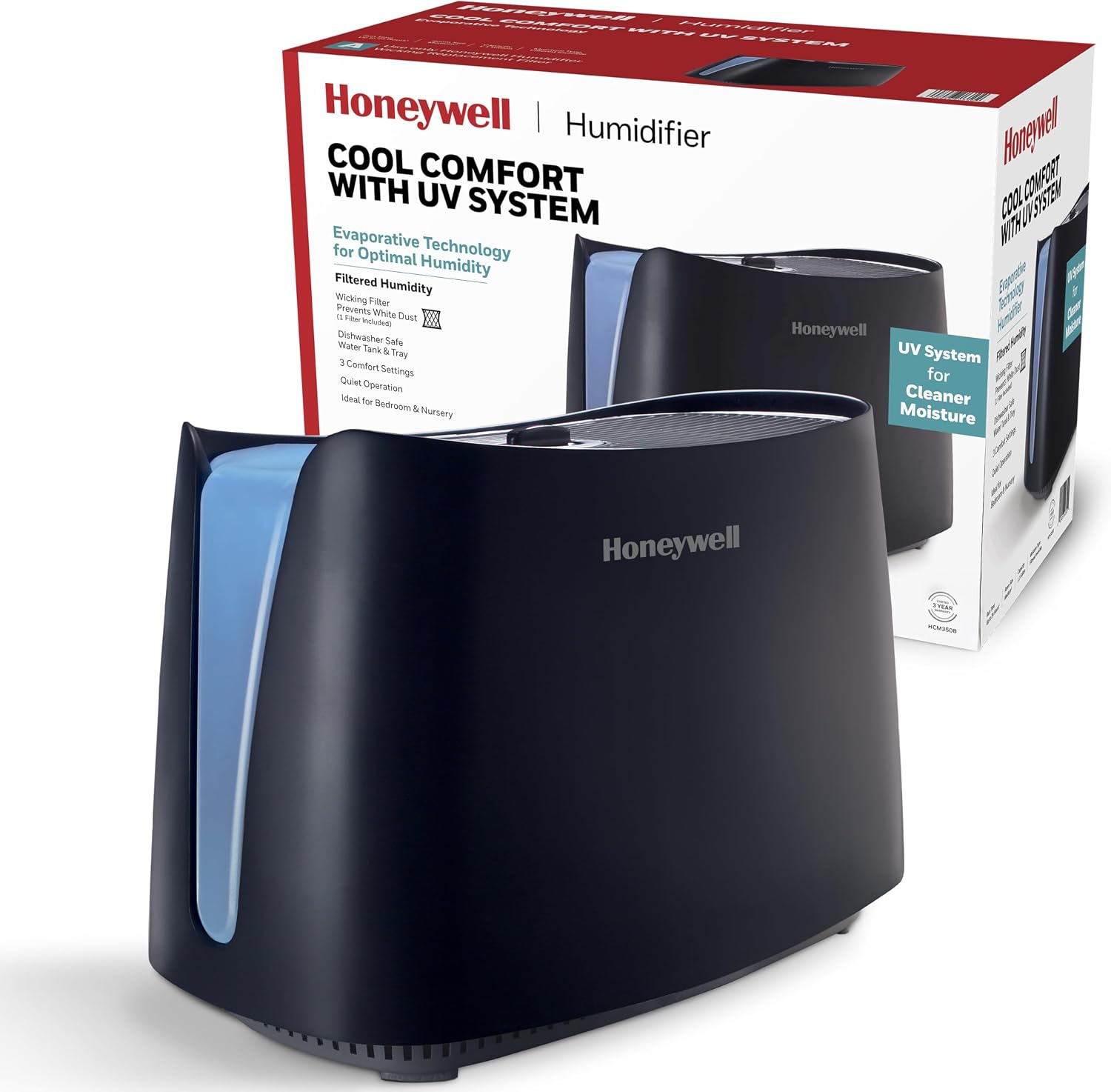
Mayo Clinic says to clean humidifiers every three days. For that deeper clean, unplug the unit and take it apart as far as the manual allows. A tank-style portable unit like the one below has a tank, a base and a few small parts that all need attention.
For mineral buildup or film on the tank and other parts, Mayo Clinic suggests a 3% hydrogen peroxide solution, which you can buy at a pharmacy. It notes that some makers recommend chlorine bleach or other disinfectants, so follow your manual and do not mix cleaning products. Whatever you use, rinse the tank thoroughly afterward so no residue ends up in the air you breathe.
The Water You Use Changes Everything
Mayo Clinic recommends distilled or demineralized water in portable humidifiers. Tap water contains minerals that can allow bacteria to grow inside the unit, and when those minerals are released into the air they often look like a fine white dust on furniture. If you have ever wiped chalky powder off a nightstand near a humidifier, that was likely the minerals.
Distilled water costs a little more than tap, but it also means less scale to scrub, fewer deep cleans that feel like chores, and a cleaner unit overall. I switched after the pink-film incident and my cleaning time dropped noticeably.
Filters, Wicks and the Furnace Filter
If your humidifier has a filter, Mayo Clinic says to change it at least as often as the maker suggests, and sooner if it looks dirty. It adds that you should also change the filter in your central heating and cooling system on a regular basis. A clogged wick works harder, grows grime faster and humidifies less.
Whole-House Units Need Care Too
Furnace-mounted humidifiers hide behind a panel, so they are easy to forget. Most use a water panel or pad that collects minerals over a heating season, and the manufacturer’s manual will tell you how often to swap it. If you are weighing one of these, our whole-house humidifier reviews compare models, and our humidifier buying guide explains the maintenance differences between types before you buy.
A Simple Cleaning Schedule
- Daily: unplug, empty the tank, dry the inside, refill with distilled water.
- Every three days: take it apart, remove mineral film following the maker’s instructions, and rinse well.
- Every filter change: follow the manual, and replace sooner if it looks dirty.
- End of season: clean thoroughly, let every part dry completely, and store it dry.
The Bottom Line
Humidity only helps when the machine making it is clean. If your unit has a smell, a visible film or a stubborn white crust, it is overdue for a proper cleaning. Build the daily rinse into a habit you already have, put the three-day clean on your calendar, and use distilled water. Those three changes are most of the work, and they keep the humidifier doing the job you bought it for.
Categorised in: Humidifier, Maintenance