
Basement Mold: The Humidity Level That Works

My basement flooded two inches deep during a spring storm five years ago. I dried the visible water within a day and thought I’d dodged a bullet — until I found mold creeping up the drywall behind a bookshelf six weeks later. That mistake taught me more about humidity control than anything I’d read before it.
Why Basements Are Mold’s Favorite Room
Basements run cooler than the rest of the house and sit closer to groundwater, so relative humidity there is almost always higher than upstairs, even with no visible leak. The EPA advises drying water-damaged areas within 24–48 hours to prevent mold growth — which is exactly the window I missed after my flood.
The Number That Actually Matters: 50%
After that scare, I bought a hygrometer and started logging my basement daily. What I found: whenever relative humidity crept above 55% for more than a couple of days, I’d start smelling that faint musty odor, even with no visible growth yet. The EPA recommends keeping indoor humidity below 60 percent, ideally between 30 and 50 percent, and in my own logs, that range held up as the real tipping point, not just a rounded guideline.
Keeping a basement under 50% sounds simple until you actually try it without equipment. Basements are naturally cooler, so the same amount of moisture in the air reads as a much higher relative humidity than it would upstairs. A basement that “feels fine” can easily be sitting at 60-65% RH, which is squarely in mold-growth territory, especially against exterior concrete walls where temperatures run even lower.
What Actually Worked for Me
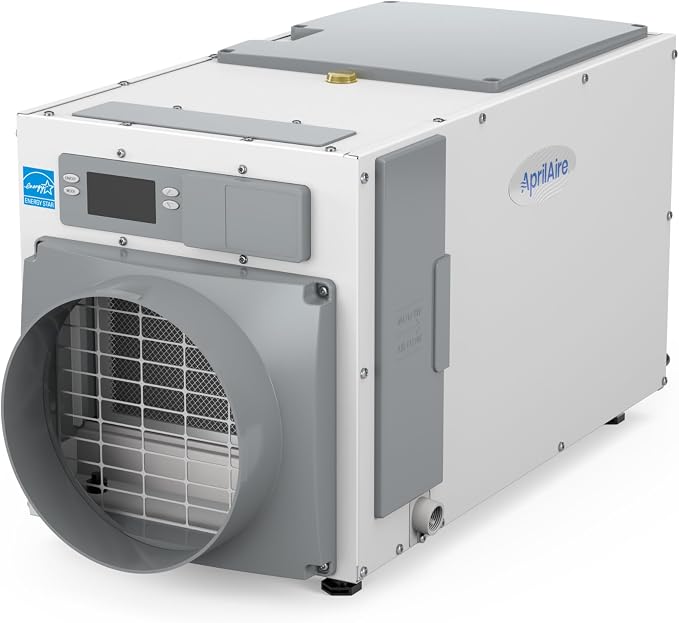
A window AC unit and a fan did nothing measurable. What worked was a proper whole-house dehumidifier sized for the square footage, running on a humidistat set to shut off automatically at 45%. I stopped smelling anything musty within about two weeks, and a year later, a home inspector doing an unrelated furnace inspection specifically commented on how dry and clean the basement smelled. We put together a full comparison of the units we tested for coverage, drainage, and noise in our whole-house dehumidifier reviews if you’re shopping for one.
Signs Your Basement Humidity Is Already a Problem
Musty smell that comes and goes with the weather. This was my first real clue, appearing mostly on humid summer days.
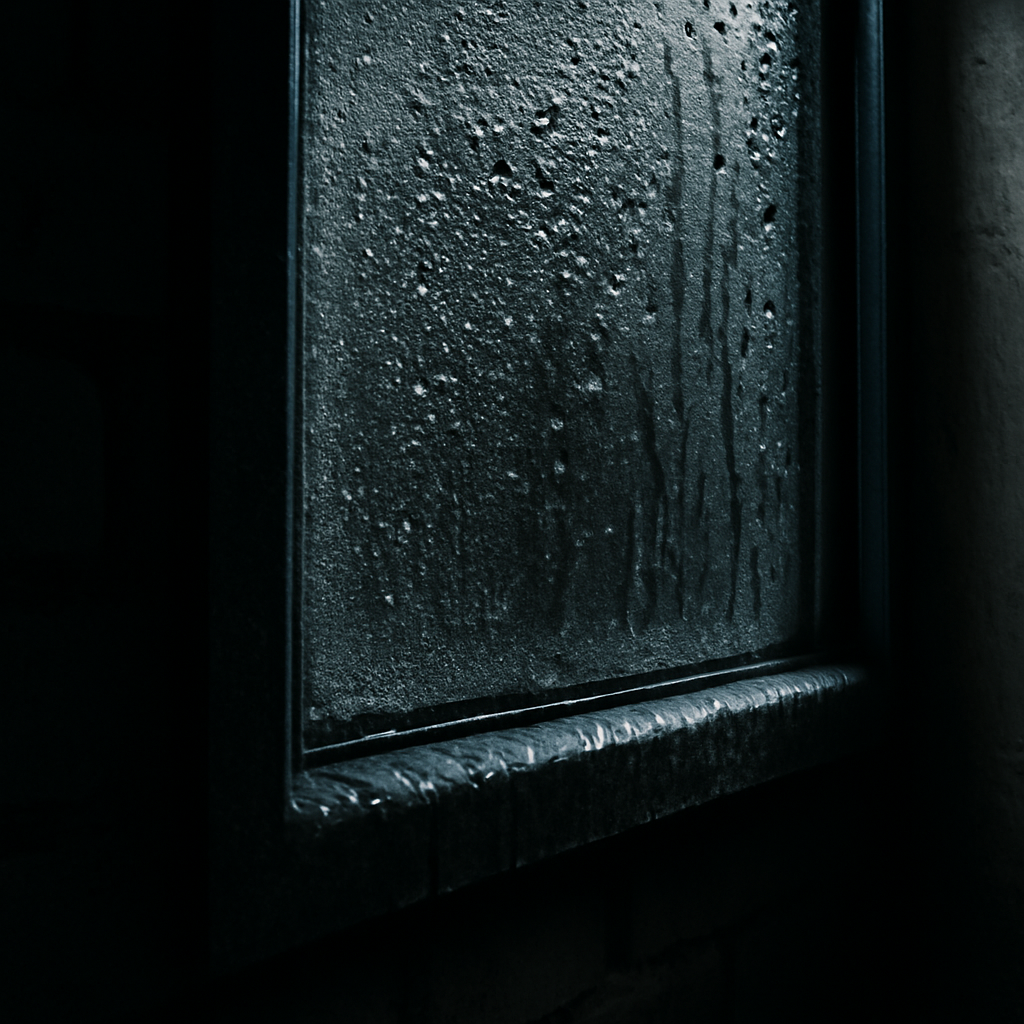
Condensation on cold water pipes or the foundation wall. If you can see beads of water forming, the air around them is already saturated at that surface temperature.
Efflorescence — that white, chalky residue on concrete. It’s mineral deposit left behind by moisture moving through the wall, and it’s a strong sign of a chronic humidity issue, not a one-time event.
Warped cardboard boxes or swollen book pages. Porous materials pick up ambient moisture long before mold becomes visible to the eye.
Don’t Wait for the Smell
By the time a basement smells musty, moisture has usually already been elevated for weeks. A cheap hygrometer left in the corner for a week will tell you more than your nose will, and it’s the single easiest way to catch a rising humidity trend before it turns into a remediation bill. My flood was the expensive way to learn this lesson — a $15 sensor would have taught me the same thing for a lot less.
How Much a Dehumidifier Actually Changes the Air
Before the dehumidifier, my basement logs hovered between 58% and 68% through summer, spiking higher after rain. After running a properly sized unit on an automatic humidistat, the same room held steady between 42% and 48% through an entire summer, including a stretch of unusually wet weather that would have previously pushed readings well past 70%. That’s not a marginal improvement — it’s the difference between a room that actively grows mold given enough time and one that structurally can’t.
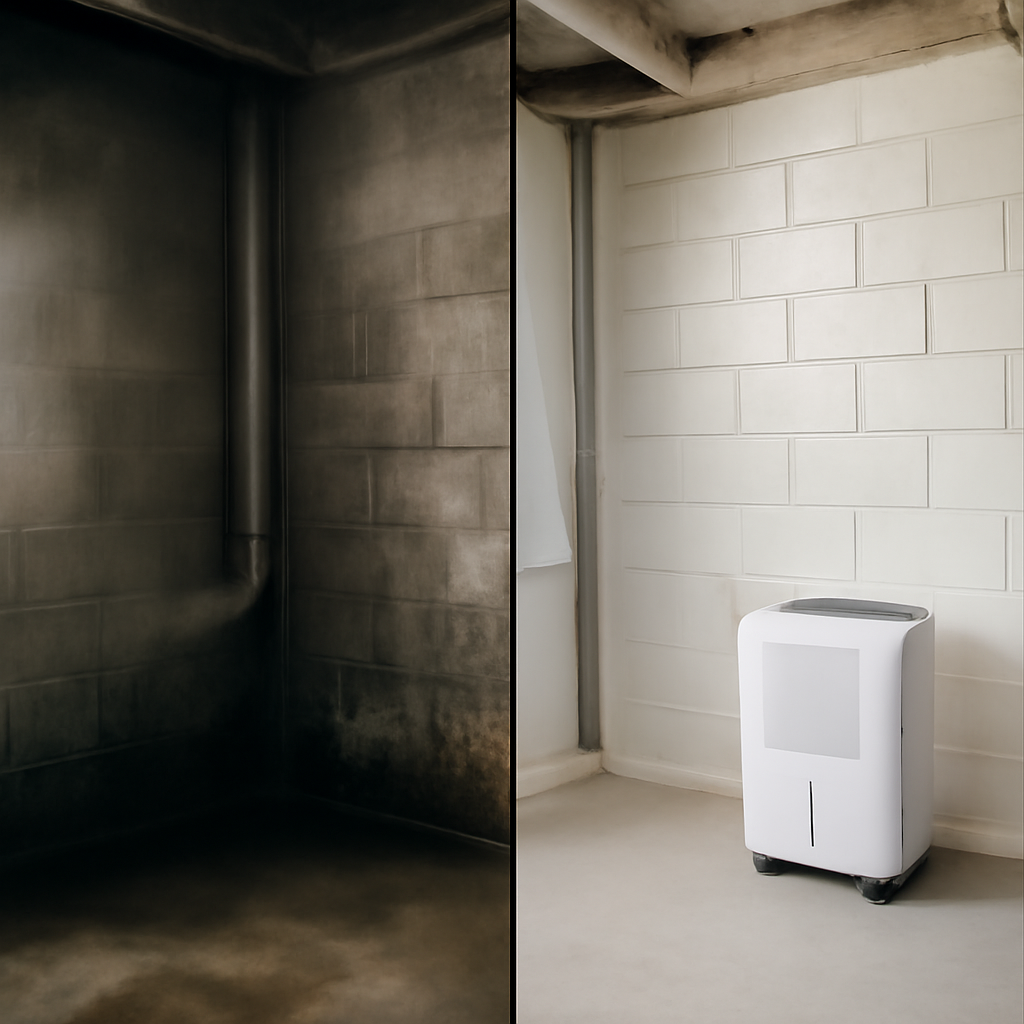
Sizing matters more than most people expect. A dehumidifier rated for a small bedroom will run constantly and still lose ground in an 800 square foot basement with a sump pump and exposed concrete. Pint-per-day capacity and square footage coverage are both listed on any legitimate unit, and it’s worth erring toward the larger size rather than the one that technically fits your square footage on paper, since basements almost always run more humid than the manufacturer’s test conditions assume.
A Basic Basement Humidity Checklist
Test before you guess. A $15-20 hygrometer left in the room for a week gives you a real baseline instead of a hunch.
Address standing water within 24-48 hours, always. Even a small, contained spill can seed mold growth if it’s left to dry on its own in a low-airflow corner.
Run a dehumidifier on an automatic humidistat, not a timer. Humidity swings with outdoor weather far more than with time of day, so a humidity-triggered unit responds to what’s actually happening instead of a fixed schedule.
Check corners and behind furniture specifically. Airflow is worst there, which means humidity and mold risk are both highest in exactly the spots people check least often — my own mold six weeks after the flood grew in precisely that kind of dead air pocket.
Related Posts:
Categorised in: Dehumidifier, Health Benefits