
Central vs Portable Humidifiers: Which Fits You
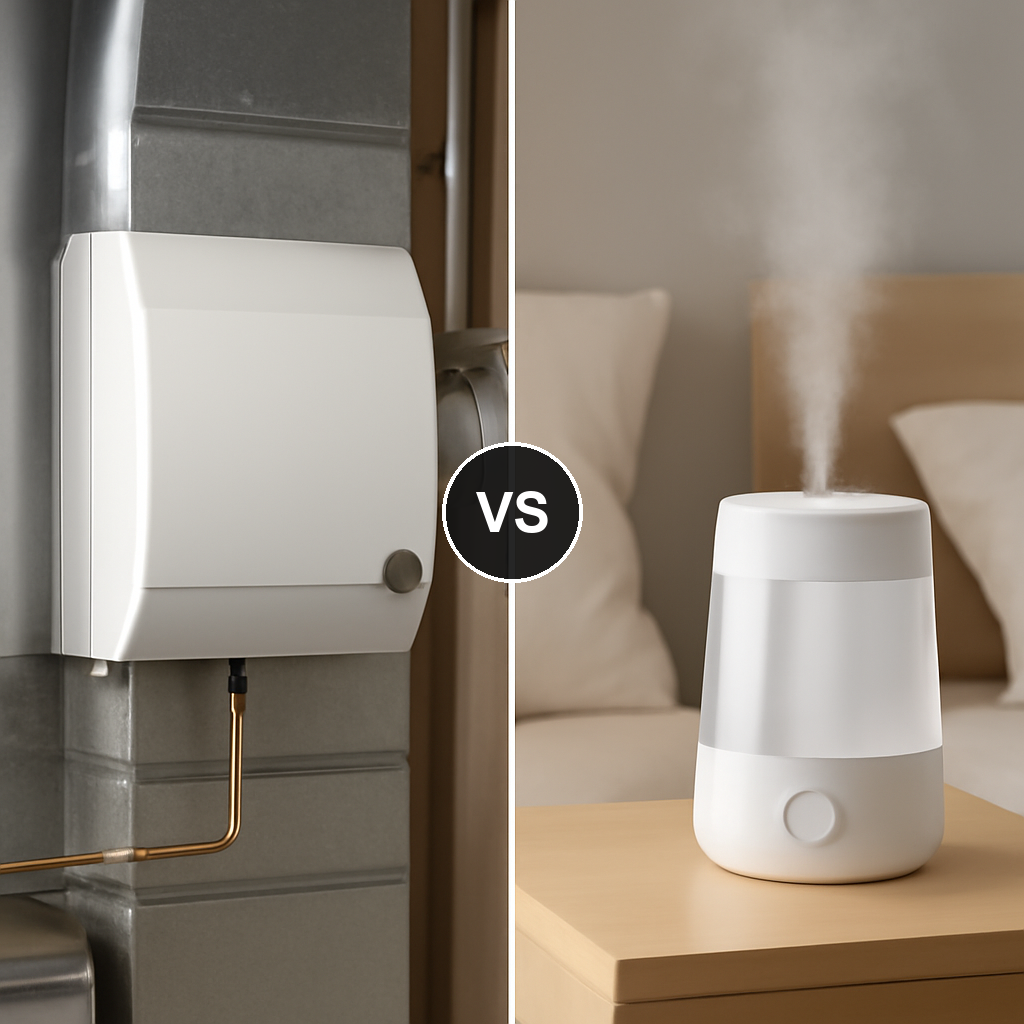
I ran a portable humidifier in my bedroom for two winters before installing a central, furnace-mounted unit. I genuinely didn’t expect the difference to be as noticeable as it was, and I want to walk through what actually changed, not just repeat the marketing pitch for either option.
What Each Option Actually Does
A portable humidifier is a standalone appliance you fill and place in one room. A central, or whole-house, humidifier mounts directly onto your furnace ductwork and humidifies air as it circulates through your entire HVAC system, reaching every connected room automatically. Mayo Clinic’s guidance is to keep indoor humidity between 30% and 50%, regardless of which delivery method gets you there.
What I Noticed Switching From Portable to Central
With the portable unit, my bedroom stayed reasonably comfortable, but I was refilling a tank daily and cleaning the tank weekly to stop mineral buildup and the faint mildew smell that crept in if I skipped a cleaning. Meanwhile, my home office down the hall stayed dry enough that I kept a second small humidifier running there too — effectively managing two separate appliances just to cover two rooms.
After the central unit install, every room read within a similar humidity range on my hygrometer, without me refilling anything. The dual-sensor model I chose adjusts output automatically based on outdoor temperature, which solved a problem I hadn’t even realized I had: on milder days, my old portable unit would occasionally over-humidify and fog a nearby window, something the central system’s outdoor sensor is specifically designed to prevent.
The Real Trade-Offs
Installation. A portable unit is plug-and-go in minutes. A central unit is a genuine project — mine took a weekend and involved sheet metal work, a low-voltage wire run, and a water line tap. If you’re not comfortable with that yourself, it’s an HVAC technician call.
Upfront cost versus convenience. Portable units are cheaper to buy but carry an ongoing time cost: daily refilling and weekly cleaning add up over a winter. Central units cost more upfront but essentially disappear into the background once installed.
Renters versus homeowners. If you’re renting or don’t have easy furnace access, a portable unit is simply the more realistic option regardless of coverage trade-offs.
Coverage. This was the deciding factor for me. A portable unit humidifies roughly one to two rooms well. A central unit conditions every room connected to your ductwork simultaneously, which matters a lot if dry air is a whole-house problem rather than a single-room annoyance.
How I’d Decide Today
If dry air is really a whole-house issue — static everywhere, multiple family members with dry skin or nosebleeds, cracked woodwork in more than one room — a central system solves the root problem instead of patching one room at a time. If it’s genuinely isolated to a bedroom or nursery, a good portable unit is still a completely reasonable, lower-commitment choice. We broke down specific models for both approaches, including manual and automatic central options, in our whole-house humidifier reviews.
What I’d Tell Someone Starting From Scratch
Don’t buy based on which option sounds more impressive. Walk through your actual house first: is the problem in one room, or everywhere? That single question would have saved me two winters of managing tanks and filters in multiple rooms before I found the setup that actually matched my house.
The Maintenance Difference I Didn’t Expect
What surprised me most wasn’t the coverage difference — it was how much mental overhead disappeared. With the portable units, humidifying the house was an active daily task: check the tank, refill it, occasionally descale it, remember to do the same in the second room’s unit. With the central system, it became a background process, the same way I don’t think about my furnace heating the house room by room. I only interact with it once a year to swap the water panel, which takes about ten minutes.
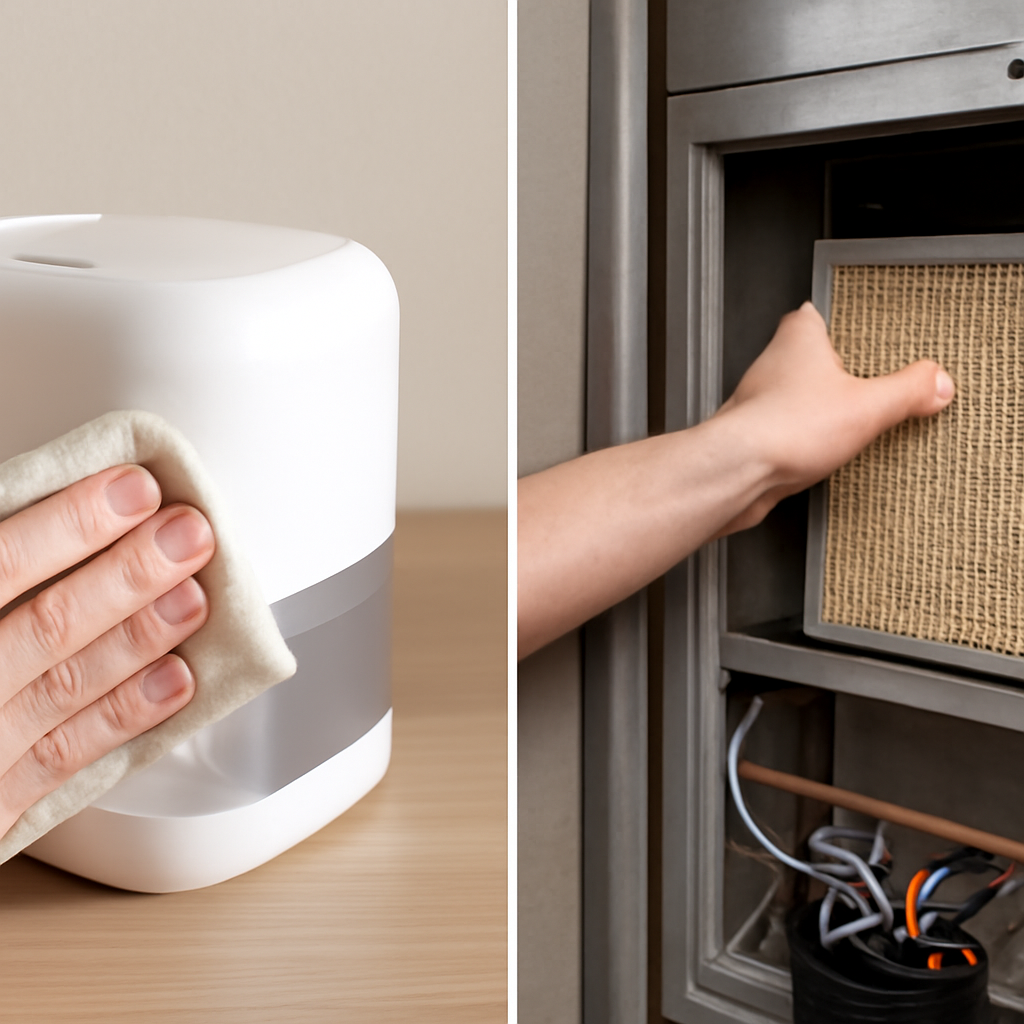
That said, central systems aren’t entirely maintenance-free. The water panel needs replacing roughly once per heating season to prevent mineral scale buildup and keep efficiency up, and the unit needs a working floor drain or condensate pump nearby. It’s a smaller, less frequent task than daily tank refills, but it’s not zero.
A Realistic Cost Comparison Over Time
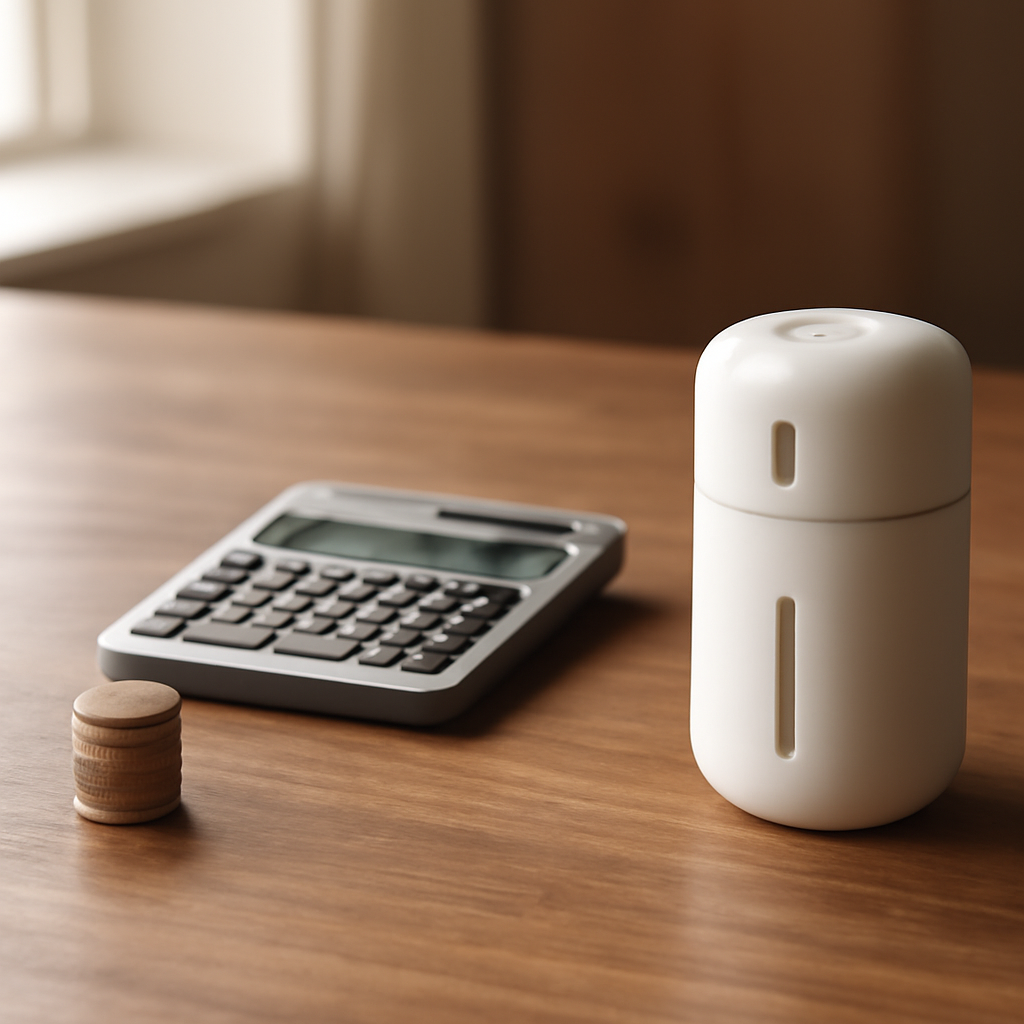
A decent portable unit is the cheaper purchase, but replacement filters or wicks add up over a few winters, and running two units to cover two rooms effectively doubles that ongoing cost. A central system costs more to buy and install, but a single annual water panel is typically the only recurring expense, covering the entire house rather than one room. Whether that trade-off makes sense really depends on how many rooms you’re currently trying to keep comfortable and how long you plan to stay in the house — for a starter apartment, it rarely pencils out; for a house you plan to be in for years, it usually does.
Categorised in: Humidifier