
Vacuum 101: All Types of Vacuum Cleaner You Need to Know About
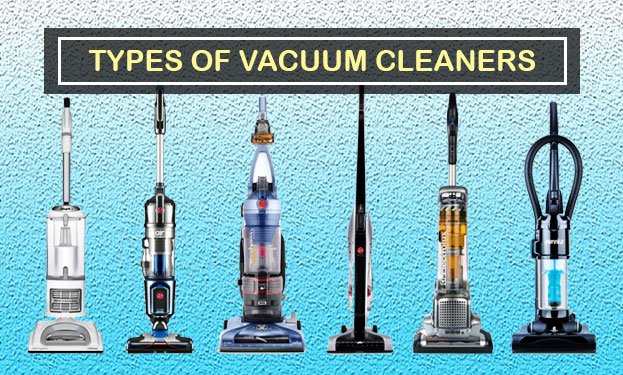
Vacuum cleaners have long been in use since the 19th century and continue to remain very popular for users in dealing with domestic and industrial waste. Though there are different shapes, sizes and types of vacuum cleaner, they perform the same function and have become an important tool in modern-day waste management. Vacuums use a centrifugal fan to suck up dirt particles from floor surfaces. Different vacuums work in different ways and serve specialized functions when dealing with different floor surfaces, rugs, and carpets. There are as many as 10 different vacuum configurations in use today but they come in five basic types.
Basic Types of Vacuum Cleaner
How vacuum cleaners work and the different types vary but they perform the same function with different modes of operation. There are basically 5 types of vacuum cleaner as mentioned below:
1. Handheld Vacuum Cleaners:
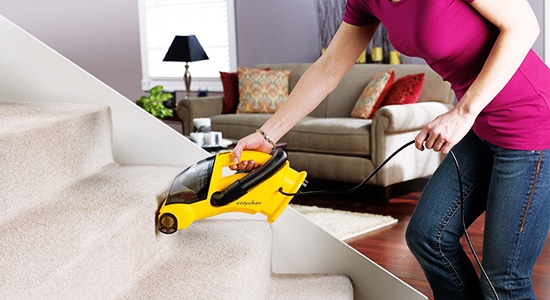 These vacuum cleaners are held by hand and used to suck up dirt from tight spaces and places that are difficult to reach. They are mostly used in rooms with very limited spaces and in cleaning cars and engine parts.
2. Canister Vacuum Cleaners:
This is another type of vacuum cleaner used in large and business properties. They come in different sizes and are used in cleaning carpets and bare floor surfaces. Canister vacuum cleaners are technologically enhanced and have multi-functionality with a separate Canister which is connected to a wand.
3. Upright Vacuum Cleaners:
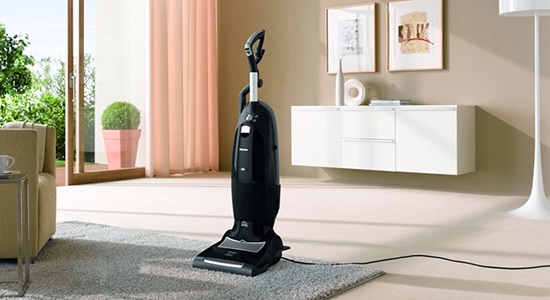 The upright cleaner is the most popular and widely used device particularly suited for private households. It is a powerful device standing in an upright position and used for general house clean-ups for both carpets and bare floor surfaces.
4. Stick Vacuum Cleaners:
Used for cleaning narrow and tight places, it comes with a stick-like handle and is easy to manipulate and operate. It is effective in cleaning bare and hard floors, rugs and slim carpets.
5. Robot Vacuum Cleaners:
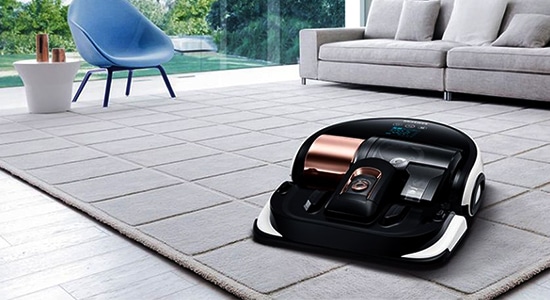 These are automated devices which require minimal hands-on control by the user. When switched on and placed on the intended area, it roams freely on its own covering every surface area of the house. Its sensors track and suck up every dirt and debris even in tight crevices.
Different Types of Vacuum Cleaner (Based on Bagging System)
There are two types of vacuum cleaner in terms of bagging.
1. Bagged Vacuum Cleaners:
This is the traditional and very first form of cleaning system introduced to the market in the 90’s. It has a replaceable bag which holds dirt and debris cleaned off the floor. These bags when full can be replaced with a fresh one and are very good for users who suffer from allergies because accumulated dirt is well secured to prevent human contact up until when they are to be disposed of.
2. Bagless Vacuum Cleaners:
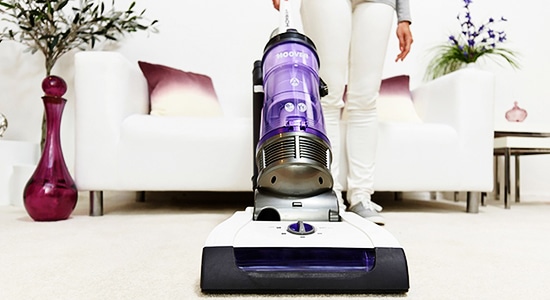 Bagless cleaners come with an attached transparent container which can be used all through the lifespan of the device. The dirt collection bin can be removed when full for discharge and then replaced. It is different from the bagged type which makes use of a fresh bag every time it is used. Knowing their differences will be much helpful for you.
Vacuum Cleaner Types (Based on Location/Surface Area)
1. Carpeting:
Carpets tend to trap a lot of dirt underneath which may be difficult to reach during cleaning. This could create a problem for households who desire to live in clean homes. An Upright Cleaner is best for cleaning carpets because of its powerful suction capabilities. They pull up dirt from tiny holes and crevices and are also sensor enabled to track dirt and dust particles.
2. Bare Floors:
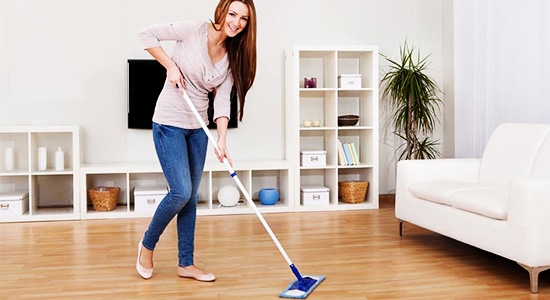 To prevent scratches on floors and also ensuring perfect cleaning, a sweeper cleaning device is preferable. Canister Vacuum cleaners are best on bare floors as they ensure your floors are properly cleaned without damaging floor surfaces with unwanted marks.
How These Vacuum Cleaners work
How does a vacuum cleaner work? Below are the working principles of 5 types of vacuum cleaner we discussed above.
Bagless:
Bag-less devices have filters which are used to separate dust from air during operation. They have permanently attached plastic bins which secure dirt. This bin can be removed with the accumulated dirt and debris disposed of after use and then replaced.
Bagged:
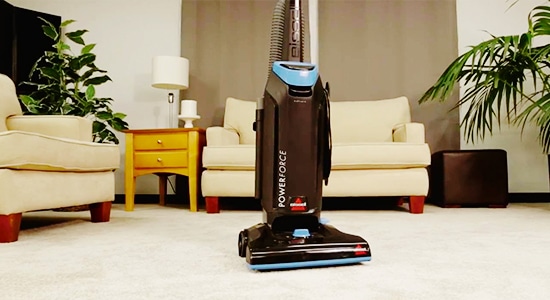 Bagged Vacuum Cleaners use replaceable bags as Filters while allowing air to flow through the bag which can be replaced with a fresh one when full with the old one disposed of.
Cyclonic:
A recent technology invented to improve cleaning; the Cyclone is an air filtering system which is used to keep the vacuum device clean. It uses a special motorized spinning fan to suck in dusty air which prevents clogging or blockage. The Cyclone technology sends the air stream through one or several cylinders and does not make use of filters but gathers dirt all the same. As a result of its enhanced technology, its performance does not diminish even as more dirt is accumulated.
Robotic:
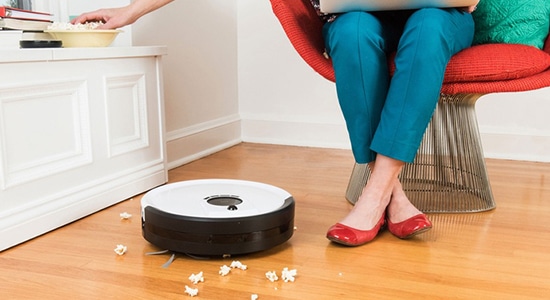 Are Roboticized cleaners which are not operated manually but make use of automation for navigation. They make use of Sensors and Motors to track and pick up dirt all around the house.
Wet Cleaners:
This type of cleaner possesses two chambers which separate liquid and solid waste. Wet vacuum cleaners do not use a dirtbag, rather dirt that is sucked in passes through a tube using the airflow which drops in speed at the point of discharge. After suction, the liquid and solid dirt particles fall into the appropriate waste compartment and air current is then drawn through a fan and is released via an exhaust port. Wet cleaners also make use of two different filter types – a foam filter for liquid dirt and a paper filter for dust and dirt particles.
 In choosing the ideal vacuum cleaner for your domestic or industrial needs you will need to first take note of the type and volume of dirt you will potentially have to deal with as well as the type and length of surface areas. Upright and handheld cleaners are best for private use and in homes where dirt is not accumulated in large volumes.
Canister vacuum cleaners, on the other hand, are heavy-duty devices used in offices and industrialized settings. They are best for handling industrial waste and are recommended when dealing with large surface areas, like offices, halls, boardrooms, and parks.
Robot/automated cleaners, though expensive, provide users with a stress-free cleaning experience because they don’t have to be controlled or monitored during operations. Their built-in sensors work with minimal or no human supervision except when accumulated dirt needs to be discharged or when the device is to be turned off. Whichever you choose, you can be sure of having a clean environment as often as you desire.
Related Posts:
Categorised in: Buying Tips, Vacuum cleaners
2 Comments
Thanks for explaining the different types of vacuum cleaners and the advice to consider the type and volume of dirt you will potentially deal with as well as the length of surface areas in order to figure out which one is best. Once you know the kind you want, it could help to research the different vacuum cleaner dealers by looking online. This could help you learn more about the various brands and models so that you can figure out which one is best for your building.
Thanks for the information on the different types of vacuum cleaners, such as bagless ones that have attached containers where the dirt is collected until you remove the attachment to throw away the junk before replacing it. When choosing one, you’d probably want to consider what it’s for, such as to clean carpets or wood floors, so you can figure out what kind is best. Once you’ve figured out what type you want, it might help to go online so you can research the various brands and models of vacuums to find one that can be used the way you want and will help you keep your floors clean.